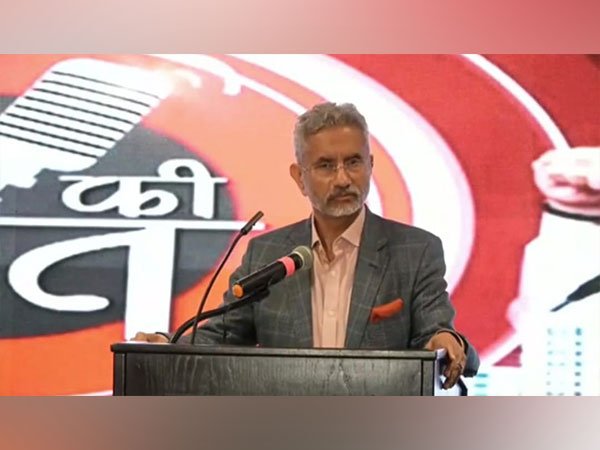
Mysuru Stating that multiple challenges confront the G20 grouping, External Affairs Minister S Jaishankar said that India adopted an unconventional approach to its Presidency, making it much more connected with people.
A major highlight of the second day of the Think20 (T20) Summit in Mysuru on Tuesday was a virtual address by Jaishankar, followed by a high-level interaction with him.
Speaking on India’s G20 Presidency, Jaishankar said that there have been “some achievements, some work in progress, and some hope in progress”.
The T20 is an official Engagement Group of the G20 and serves as an “ideas bank” for the G20 by bringing together think tanks and high-level experts to deliberate on relevant policy issues. Observer Research Foundation (ORF) is serving as the T20 Secretariat during India’s Presidency of the G20.
Introducing the session, Ambassador Sujan Chinoy, Chair, T20 India, described Jaishankar as “a remarkable leader who strides Indian foreign affairs like a colossus”, and as “a key architect of India’s robust foreign policy under Prime Minister Narendra Modi”.
In his address, Jaishankar observed that with the G20 Leaders’ Summit 2023 a little over a month away, four points were especially important with respect to the ongoing Indian G20 Presidency.
Jaishankar said that given the immense value of the G20 as an international grouping, “India must ensure a focus on the right issues and come up with an actionable consensus”.
The external affairs minister emphasised that it is crucial that the G20 remain unified and cohesive, with “open discussion among all members, irrespective of their other affiliations”.
Jaishankar stressed that the polarisation within the UN Security Council has made the G20 a more crucial group than it might otherwise have been.
He stated said that at a time when development is under stress worldwide, the G20’s mandate on development and growth makes it a key contributor to the global good.
“Multiple challenges confront the G20 today. There is a North-South divide and an East-West disconnect, Covid’s impact across sectors, the Ukraine conflict, a debt crisis, and trade disruptions. These factors have impeded efforts to achieve the Sustainable Development Goals and to undertake climate action,” Jaishankar said.
He further asserted that early in its Presidency, “India decided it was important to be fair to countries not in the room and to hear them”.
Consequently, India conducted an exercise called the ‘Voice of the Global South Summit’ in January 2023, entering into a dialogue with 125 countries in order to distil their development concerns. These have shaped India’s priorities as G20 President, he said.
The External Affairs Minister added that as the Indian Presidency draws to a close there have been “some achievements, some work in progress, and some hope in progress”.
A few milestones have included the positive outcomes of the Development Ministers’ Meeting in June 2023; consensus around the idea of sustainable lifestyles; a decisive focus on the challenges of advancing the SDGs; a strong and sustained emphasis on women-led development; and progress in deliberations on reforming multilateral development banks, Jaishankar said.
“It is important for G20 member states to realize that what unites us is greater than what separates us,” the external affairs minister said.
Jaishankar concluded his address by stating that India had adopted an unconventional approach to its G20 Presidency, making it “much more connected with people”, and demonstrating that “their concerns and global concerns are indivisible”.
He said that India had been able to leverage the G20 platform to showcase “change in action”, and to “make the world ready for India, and India ready for the world”.
Responding to a series of questions by Samir Saran, Chair, T20 India Secretariat and President, Observer Research Foundation, Jaishankar said that one of his primary concerns was that the world would take years to recover from the shocks caused by Covid.
“Ever since the financial crisis of 2008-9, there had been some form of global turbulence every year, all of which had had the effect of broadening the remit of the G20, and causing it to mutate and improvise,” he said.
Much like most other major groupings, the G20 would “have to absorb the major global developments of its time,” Jaishankar said.
Speaking of his recent visits to Africa, the external affairs minister observed that Africa needed to have a “stronger voice” in the G20, and his visits highlighted how strongly India felt about this.
He reiterated PM Modi’s conviction that the African Union must have permanent membership in the G20, pointing out that “Africa is also the continent of promise – in terms of its demographics, talent, resources, and strategic location. More broadly, the underrepresented voices of the Global South must be taken to the G20, because the Group has weight, authority, and a real ability to shape the future”.
Jaishankar was also optimistic about the continuity between the Indian and Brazilian Presidencies because of the G20’s long-standing tradition of closeness between members of the troika.
“The idea of the troika is to share and build upon the experiences of one’s predecessor and to be able to take decisions as a trio,” he added.
Addressing a question about the need to reform multilateralism, Jaishankar said that multilateralism, as it stands today, is “anachronistic”.
“The absence of Asia and Latin America from the UN leadership is detrimental to the UN, and the more formal multilateralism fails us, other groups like the BRICS, the Quad or the G20 will be left to pick up the slack,” Jaishankar added.
During the event, Maria Fernanda Espinosa, former President of the UN General Assembly lauded India for prioritising women-led development.
Minister of External Affairs said that this was an issue whose importance PM Modi had underscored repeatedly; and noted that “women are the glue that holds families and communities together”, and “women’s leadership at the workplace has also been a subject of great focus in India”.
Jaishankar further stated that every instance of social progress has reflected the well-being of women, and expressed his hope that women-led development would be a point of emphasis at the G20 Leaders’ Summit as well.
Meanwhile, 200 participants from 35 countries and nearly 110 institutions are being hosted at the T20 Summit. They include diplomats, policy planners, heads of think tanks and research institutions, civil society organisations, multilateral agencies, and eminent thinkers whose collective agency will ensure rich and diverse discussions at the Summit.
The T20 Summit is hosted by the Observer Research Foundation under the aegis of India’s G20 Presidency.