SRINAGAR, FEBRUARY 18: In a significant move toward fortifying India’s agricultural future against the rising challenges of climate change, Sher-e-Kashmir University of Agricultural Sciences and Technology of Kashmir concluded a 21-day ICAR Winter School today at its Shalimar campus.
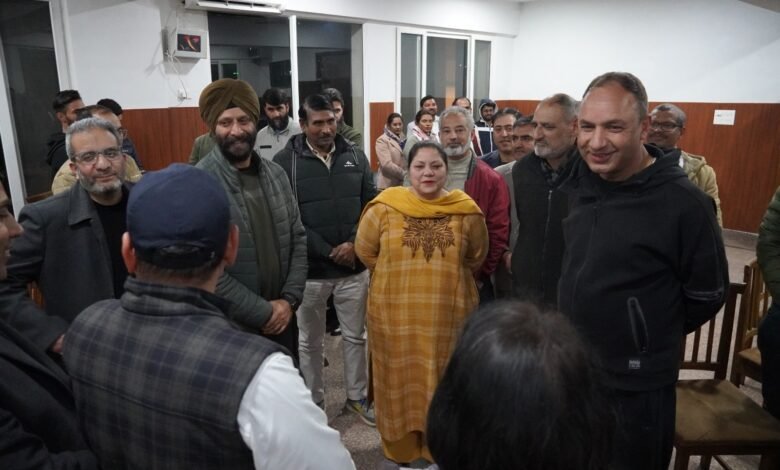
The intensive program, ‘Fostering Climate Resilience and Sustainability through Organic and Regenerative Agriculture’, brought together an elite group of 30 scientists and faculty members representing 10 different states and Union Territories, marking a milestone in national collaborative research.
The program was conducted under the supervision of Course Director Prof Parmeet Singh, Chief Scientist of Agronomy, who designed a curriculum that bridged the gap between traditional organic practices and modern regenerative science. Over the course of three weeks, the Directorate of Research transformed into a hub of global intellectual exchange, featuring a rigorous schedule of 40 offline and 10 online sessions delivered by some of the most influential voices in world agriculture.
The academic rigor of the Winter School was underscored by the participation of legendary soil scientist and World Food Prize Laureate, Dr Rattan Lal, whose insights into carbon sequestration and soil health provided a visionary framework for the participants. Other international luminaries included Prof Baghirath Singh Chauhan from the University of Queensland, Australia, and Dr Asmita Murumukar of Ohio State University, USA. The sessions were further enriched by Dr Ramesh Singh, Global Leader for Regenerative Agriculture at ICRISAT, and Dr K Kathiresan, former Vice-Chancellor of Annamalai University, alongside specialized resource persons from the Indian Council of Agricultural Research (ICAR) and various State Agricultural Universities.
During the valedictory function, Dr Haroon Rashid Naik, Director, Research SKUAST-K, commended the organizers for maintaining a high standard of scientific discourse. The highlights of the program were interactive lectures, practical laboratory work, and field exposure visits that allowed participants to see regenerative principles in action. He encouraged the visiting scientists to act as ambassadors for these “nature-positive” technologies, urging them to implement and scale the knowledge gained within their home institutions to ensure a ripple effect across India’s diverse agro-climatic zones.
The ceremony concluded with the distribution of participation certificates by Chief Guest Vice Chancellor, Prof Nazir Ahmad Ganai, who thanked ICAR for its continued trust in SKUAST-K to lead such vital national initiatives. He said the completion of the Winter School has effectively sown the seeds for a more sustainable and resilient agricultural landscape, positioning Kashmir at the forefront of the global regenerative movement.