Planning is backbone of rural development: Altaf Wani Calls for convergence, participatory planning at VGPP Workshop in Jammu

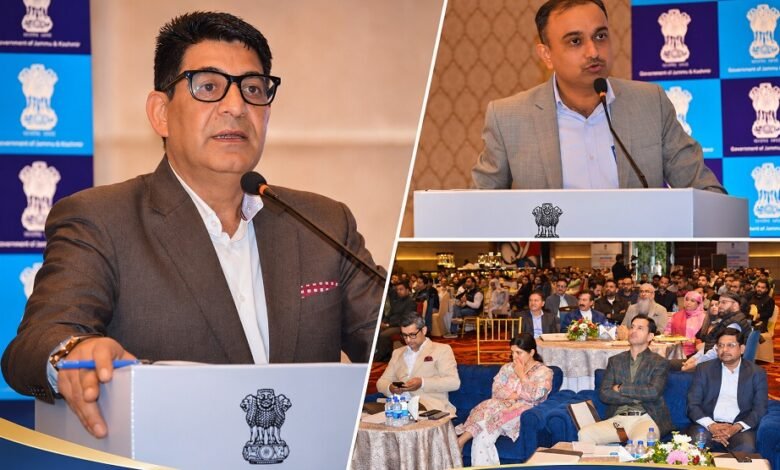
JAMMU, NOVEMBER 27: Minister for Rural Development Department & Panchayati Raj, Forest, Ecology & Environment, Altaf Ahmad Wani, today described planning as the backbone of development and called for effective convergence with line departments to make rural areas developed, self-reliant and sustainable.
Addressing a day-long workshop on the Viksit Gram Panchayat Plan (VGPP), organised by the Department of Rural Development & Panchayati Raj in Jammu, the Minister said the initiative is aligned with Prime Minister Narendra Modi’s vision of making India a developed nation by 2047, coinciding with the centenary of independence. He said the workshop marked an important step towards achieving this vision at the grassroots level.
Emphasising the importance of planning in shaping rural development, Altaf Wani said the Government of India has laid special emphasis on structured and participatory planning under the Viksit Bharat 2047 vision. He urged officers and field functionaries to take ownership of the initiative and translate its objectives into tangible outcomes, asserting that with commitment, dedication and determination, even the most challenging goals can be achieved.
The Minister said field functionaries are the face of the Department and play a vital role in strengthening rural governance and development. He observed that the Department has the potential to achieve remarkable progress if its personnel demonstrate the will, commitment and dedication required to deliver on their responsibilities.
Altaf Wani underscored the need for greater public participation in Gram Sabha meetings and stressed consultations with elected representatives while preparing development plans. He said that, as part of a democratic system, planning must reflect the aspirations and needs of every section of society. He further emphasised that elected MLAs, irrespective of party affiliation, should be taken on board during the planning process to ensure inclusive and comprehensive development.
Highlighting the importance of convergence, the Minister called upon the Department to work in close coordination with other line departments to ensure integrated development and strengthen rural livelihoods.
Altaf Wani observed that if other departments contribute towards the material component of development works, the Department of Rural Development can complement these efforts through the labour component under the VB-G RAM G scheme, thereby ensuring need-based, comprehensive and effective development of rural areas. He said convergence mechanisms would be further strengthened and the matter would also be taken up with the concerned departmental Ministers to ensure better inter-departmental coordination and collaboration.
The Minister directed officers to expedite works under UT CAPEX, PRI grants and other development programmes, emphasising that the working season in snow-bound areas of Jammu and Kashmir is limited and requires timely execution of projects. He stressed the need to accelerate progress and ensure optimal utilisation of available funds to facilitate the release of additional resources. He also called for expediting projects initiated under the Swachh Bharat Mission.
Calling for a citizen-centric approach, Wani urged officers to remain responsive to public needs and discharge their duties with sincerity and accountability. He cautioned that negligence in the discharge of official responsibilities would invite appropriate disciplinary action. He also stressed the proper protection, preservation and maintenance of assets being created by the Department.
Speaking at the workshop, Secretary, Rural Development & Panchayati Raj, Ramesh Kumar, highlighted the objectives and framework of the Viksit Gram Panchayat Plan, stating that the initiative aims to facilitate participatory and comprehensive planning through Gram Sabhas based on the identified needs and priorities of local communities. He said the plan incorporates technology-driven planning mechanisms, including the use of Yuktdhara, and brings together the Department of Rural Development & Panchayati Raj and other line departments to ensure coordinated interventions at the Panchayat level.
The Secretary highlighted the four key thematic areas of the Viksit Gram Panchayat Plan—water security, rural infrastructure, rural livelihoods and disaster mitigation—and emphasised that convergence is a central component of the initiative to avoid duplication of works and ensure tangible, holistic and sustainable development. He said technology would be utilised at every stage of planning and implementation, including geo-tagging and monitoring, while district-level officers would play a crucial role in ensuring effective implementation. He exhorted officers to remain accountable and responsible, describing field functionaries as the eyes and ears of the Department.
The Secretary also stressed the need to complete ongoing works within stipulated timelines and asked officers to thoroughly familiarise themselves with the guidelines of VB-G RAM G and ensure their effective implementation. He further directed officers to expedite the completion of houses under PMAY-G and accelerate works related to Panchayat Ghars and Community Sanitation Complexes.
Earlier, Director RDD Jammu, Shehnaz Akhtar, delivered the welcome address, while Additional Secretary Waseem Raja outlined the objectives and key features of the Viksit Gram Panchayat Plan.
The workshop was attended by Chief Conservator of Forests, Jammu, Dr V.S. Senthil Kumar; Secretary in the Department, Rachna Sharma; Director RDD Kashmir, Riyaz Ahmad Wani; Director Panchayati Raj, Pankaj Raj Katoch; CEO IWMP, Rajneesh Kumar; Director Finance, Umar Khan; Additional Secretary, Waseem Raja; officers from line departments; Assistant Commissioners Development (ACDs); Block Development Officers (BDOs); and other senior officers and officials.
During the workshop, sessions were held on the concept of the Viksit Gram Panchayat Plan, participatory and saturation-based planning, its linkage with Viksit Bharat 2047, and the role of Gram Sabha and Gram Panchayat in grassroots development.
Additional Secretary Waseem Raja elaborated on the framework and implementation process of the VGPP, including a demonstration of the VGPP portal and water budgeting. Ms. Drishti Dwivedi and Preeti Kumari, Resource Persons from the Ministry of Rural Development, Government of India, presented an overview of VB-G RAM G and its salient features, while Mudasir Ahmed and Mohammad Amin, UT-level Master Trainers, deliberated on permissible works under the scheme and the convergence framework.
Subsequently, Rajeev Katoch from the Agriculture Department, Gul Syed from the Horticulture Department and Dr. Zaffar Iqbal from the Department of Animal and Sheep Husbandry shared insights into departmental convergence frameworks, highlighting opportunities for coordinated interventions and integration of their respective sectors with rural development planning.