Viksit Bharat is a vision of empowered citizens, effective institutions, responsible leadership: Speaker Addresses conference of CPA India Region Zone-II at Chandigarh

CHANDIGARH, JUNE 9: The vision of Viksit Bharat is ultimately a vision of empowered citizens, effective institutions and responsible leadership. It is a vision where every citizen becomes a stakeholder in national progress and every legislator becomes an agent of positive transformation.
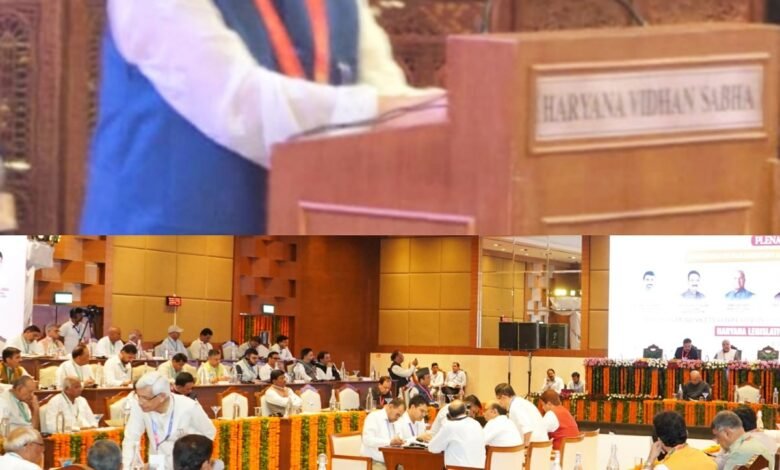
This was stated by the Speaker Jammu and Kashmir Legislative Assembly, Abdul Rahim Rather, while addressing a two day conference of CPA India Region Zone-II held at Chandigarh on 8 and 9 June in presence of Speaker Lok Sabha Shri Om Birla, Deputy Chairman Rajya Sabha Harivansh, Speaker Haryana Legislative Assembly Harvinder Kalyan, Presiding Officers and legislators
The Speaker, while speaking on the topic “Role of Aware Society and Legislators in realizing future challenges and goal of Viksit Bharat – 2047”, said that under the vision of a developed India or Viksit Bharat, our Nation is moving with confidence towards becoming a global leader in economic growth, innovation, governance, sustainability and human development.
The Speaker said that no vision can be realized by the governments alone. The true architects of a developed Nation are its citizens and the true custodians of democratic aspirations are its legislators. He added that a democracy flourishes when the citizens are informed, engaged and conscious of both their rights and responsibilities.
“An aware society is not merely one that participates in elections; it is one that actively contributes to public discourse, respects constitutional values, upholds social harmony and remains vigilant in safeguarding democratic institutions” maintained the Speaker.
Rather stated that unprecedented technological advancement has empowered the citizens but it has also created new challenges in the form of misinformation, polarization and declining trust in institutions. Therefore, the need of the hour is not just access to information but access to credible information, critical thinking and civic education.
“As Legislators it is our responsibility to strengthen the democratic literacy, promote transparency and make governance more accessible, accountable and encourage a culture where the citizens are informed participants rather than passive observers”, asserted the Speaker.
The Speaker underscored that India’s greatest strength is its youth so the role of young legislators assumes extraordinary significance. They bring energy, innovation, technological understanding and contemporary perspectives into legislative institutions, he added.
Rather exhorted that the young Legislators understand the language of the digital age, the aspirations of emerging entrepreneurs, the concerns of students and the challenges of a rapidly changing world.
“Young legislators can act as bridge between the traditional governance structures and the expectations of a modern society. They can introduce innovative policy solutions, encourage citizen participation through technology and make the democratic institutions more responsive and inclusive” he said.
The Speaker stated that as Presiding Officers and legislators, we have a special responsibility to nurture future leaders. Legislative institutions must become platforms for democratic learning, he added.
The Speaker also highlighted several emerging national challenges, including climate change and environmental sustainability, technological disruption and the ethical use of artificial intelligence, employment generation and future skills development, urbanization and infrastructure demands, cybersecurity and data protection and maintaining social cohesion in an increasingly interconnected world.
The Speaker stressed that meeting these challenges requires anticipatory governance. Legislators must proactively study the emerging trends and formulate policies that are adaptive, resilient and future-oriented, he said.
He also said that the journey towards Viksit Bharat requires a collective commitment to certain foundational principles which included quality education and skill development, good governance and institutional accountability, innovation and entrepreneurship, social inclusion and equitable development and the legislative community has a central role in advancing these priorities.
The Speaker highlighted that in Jammu and Kashmir, we have witnessed the transformative impact of citizen participation, youth engagement and developmental initiatives. “Our young people increasingly aspire to become innovators, entrepreneurs, professionals and public representatives. Their enthusiasm and determination reflect the spirit of a confident and forward-looking India” he said.
The Speaker emphasized that the success of Viksit Bharat will not be measured only by economic indicators or infrastructure projects. It will be measured by the strength of our democratic institutions, the awareness of our citizens, the participation of our youth and the inclusiveness of our development.