Gujjar-Bakarwal families begin annual return journey from J&K’s high-altitude pastures
Say centuries-old tradition essential for survival; 7.40 lakh sheep, goats taken to summer grazing grounds; 11 mobile veterinary centres set up

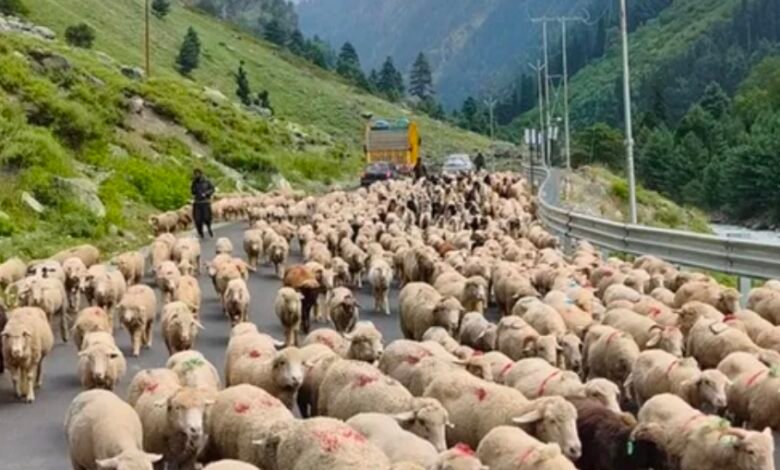
With temperatures beginning to drop in the higher reaches of Jammu and Kashmir, nomadic Gujjar-Bakarwal families have started their annual return journey from the high-altitude pastures of Kashmir towards their winter homes in the Jammu region.
The seasonal migration of the nomadic community, who travel with their sheep, goats and other livestock, is a centuries-old tradition. Every year, the community begins its journey towards the higher reaches of the Kashmir Valley around May, when temperatures rise sharply in the plains and lower mountainous areas of Jammu.
The migration is primarily driven by the availability of grazing land and suitable weather conditions for livestock. During the summer months, several areas of Jammu, including Rajouri, Kalakote, Poonch and Sunderbani, experience intense heat and a shortage of grass, making it difficult for the nomadic families to sustain their livestock.
A nomadic Bakarwal said that extreme heat and scarcity of fodder can sometimes result in the loss of sheep and goats, directly affecting the livelihood of their families.
“We have been following this tradition for generations. When the heat increases in Jammu and Kashmir and there is less grass available for our livestock, we move towards the higher areas of Kashmir. The climate and availability of pastures here provide better conditions for our animals,” he said.
He said that livestock remains the primary source of livelihood for many nomadic families. During their return journey, some of the sheep and goats are sold to butchers, helping the families meet their household expenses and sustain themselves during the winter months.
“For us, there is no other major source of livelihood. Our earnings depend largely on our livestock. We face several difficulties during the migration, but this is a tradition that has continued for centuries and is also essential for our survival,” he added.
According to details provided by the Sheep Husbandry Department, Ganderbal, around 7.40 lakh sheep and goats have been taken by nomadic families and shepherds to various high-altitude pastures this year.
The livestock and their herders have been spread across several traditional pasture areas, including Sonamarg, Vishansar, Thajiwas, Sarbal, Mangan, Dub, Saliya, Naigarh Sar and Minamarg-Drass, among other high-altitude locations.
Keeping in view the large number of livestock and the challenges faced by nomadic communities in remote mountainous areas, the Sheep Husbandry Department, Ganderbal, established 11 mobile veterinary centres during the summer grazing season.
Around 50 employees were deployed at these mobile centres to provide veterinary assistance to the nomadic communities and their livestock. The department also deployed five veterinary doctors to supervise the centres and ensure that sick or injured animals received timely medical attention.
Officials said the mobile veterinary facilities were particularly important because many of the traditional grazing areas are located in remote and difficult-to-access mountainous terrain, where transporting sick animals to permanent veterinary centres can be challenging.
As the weather now begins to change, the nomadic families have started preparing for the return journey towards Jammu. Their movement marks another phase of the centuries-old seasonal migration that continues to connect the pastoral communities of Jammu and Kashmir with the high-altitude grazing grounds of the Valley.
Despite difficult terrain, unpredictable weather and other challenges during the journey, the Gujjar-Bakarwal community continues to preserve its traditional migratory lifestyle, with livestock remaining at the heart of its economy and way of life.