Belagavi Mayor-Led Delegation Visits Srinagar to Study Smart City Projects; Appreciates Urban Development Initiatives

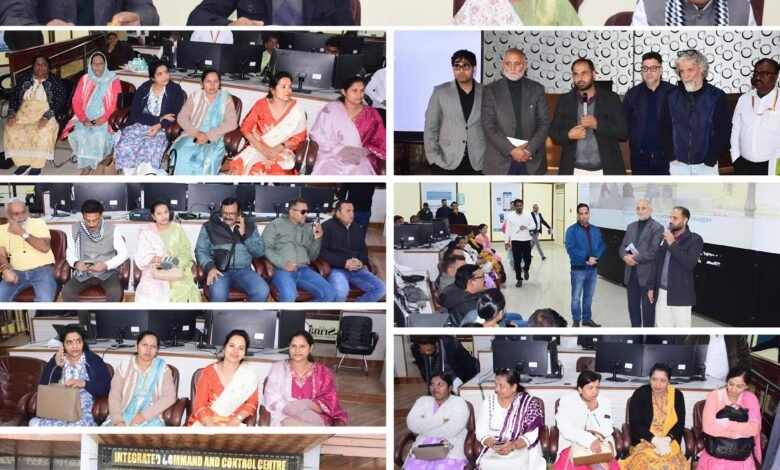
Srinagar: A 48-member delegation comprising Councillors and senior officials of the City Corporation, Belagavi, Karnataka, led by Hon’ble Mayor Ms. Preeti Kamakar and Hon’ble Deputy Mayor Mr.Hanumant Kongali visited Srinagar on a study tour to gain first-hand insights into the urban development initiatives undertaken by Srinagar Smart City Limited (SSCL) under the Government of India’s Smart Cities Mission.
The visit aimed to promote inter-city knowledge exchange, particularly in the areas of modern urban planning, sustainable infrastructure development, technology-driven governance, civic amenities and urban mobility.
The programme commenced with a briefing by Additional Chief Executive Officer, Srinagar Smart City Limited, Mr. Suhail Ul Islam, JKAS, who familiarised the delegation with Srinagar’s urban governance initiatives and the role of various agencies in strengthening civic infrastructure and improving public service delivery.
The delegation visited the Integrated Command and Control Centre (ICCC) at HMT, where officials briefed its members on its functioning and role in real-time city monitoring, traffic management, coordination of civic services and technology-enabled administration. The members were also apprised of how the facility integrates various urban operations to strengthen monitoring and improve the efficiency of civic service delivery.
The team also visited the Jhelum Riverfront at Raj Bagh, where members were briefed on the transformation of the riverbanks into accessible public spaces featuring pedestrian promenades, landscaped areas, illumination and recreational facilities. The project was highlighted as a significant intervention in revitalising Srinagar’s waterfront and enhancing public access to the riverfront.
The delegation subsequently visited the iconic Ghanta Ghar at Lal Chowk, where officials briefed the members on the redevelopment and beautification of the landmark and its adjoining public spaces, with particular emphasis on improving urban infrastructure while preserving the area’s heritage character.
During the interaction, senior officials of Srinagar Smart City Limited, including the Additional Chief Executive Officer and Chief Engineer, highlighted the organisation’s major achievements and ongoing projects. The briefing covered key interventions, including the redevelopment of Lal Chowk, upgradation of MA Road and Residency Road, development of the Jhelum Riverfront, improvement of pedestrian infrastructure, installation of energy-efficient street lighting and modernisation of traffic management systems.
A separate PowerPoint presentation on the Achan Landfill Site was delivered by the Joint Commissioner (Health & Sanitation), Srinagar Municipal Corporation (SMC). The presentation provided an overview of the city’s solid waste management infrastructure, landfill remediation initiatives and measures being undertaken to promote scientific and sustainable waste management practices. This was followed by an interactive session during which participants exchanged views on municipal sanitation and solid waste management.
Officials also highlighted Srinagar’s initiatives in sustainable urban mobility, including pedestrian-friendly streets, cycling infrastructure and technology-driven traffic management. The ICCC was showcased as a key institutional mechanism for strengthening data-driven urban administration and improving coordination among various civic agencies.
The delegation was also apprised of the national recognition received by Srinagar Smart City Limited, particularly the Best Smart Urban Mobility Award at the Smart Cities India Expo 2024, in recognition of its contribution to innovative and sustainable urban mobility solutions.
The programme concluded with an interactive session involving the visiting Councillors and officials and representatives of SMC and SSCL. Discussions focused on project planning and implementation, municipal governance, infrastructure management and sustainable urban development. The delegation appreciated the scale and diversity of the developmental initiatives undertaken in Srinagar and expressed keen interest in understanding the planning, execution and operational mechanisms behind these projects.
The study tour provided a valuable platform for institutional engagement and knowledge-sharing between the two city administrations, underscoring the importance of inter-city collaboration and the exchange of innovative practices to address emerging urban challenges and promote inclusive, sustainable and citizen-centric development.