Div Com Kashmir reviews Action Plan for NCAP 2026–27, Stresses timely completion of Projects

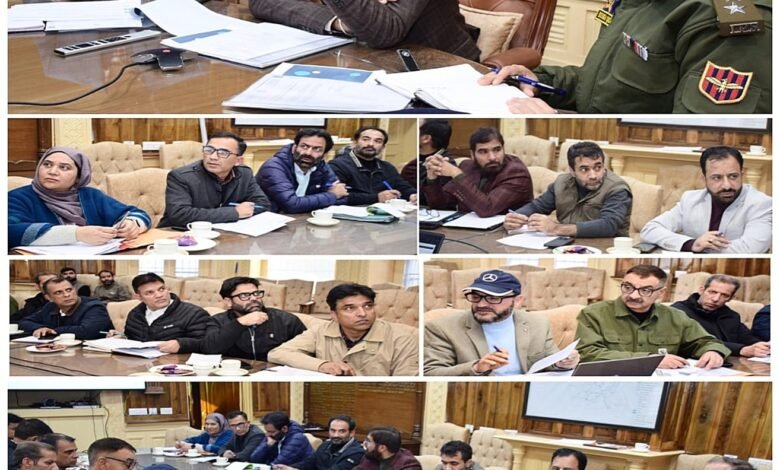
SRINAGAR, NOVEMBER 19: Divisional Commissioner Kashmir, Anshul Garg, today chaired a meeting to review the physical and financial progress of projects being implemented under the National Clean Air Programme (NCAP) and discuss the proposed Action Plan for 2026–27.
The meeting was attended by the Commissioner, Srinagar Municipal Corporation (SMC); SSP Traffic; Regional Director, Pollution Control Board; Executive Engineers of various departments and agencies; representatives of the University of Kashmir and the Floriculture Department, among others.
During the meeting, the Divisional Commissioner reviewed the progress of NCAP projects since 2020, financial allocations for 2026–27, and the approved Action Plan for the upcoming financial year.
The proposed Action Plan for 2026–27 includes the installation of 10 Intelligent Traffic Management System (ITMS) junctions equipped with automatic e-Challan facilities across Srinagar city to ease traffic congestion and mitigate air pollution.
Other key initiatives include the development of pedestrian pathways and green spaces along the Tattoo Ground Junction–Bemina Bypass Road for dust suppression; procurement of electric mechanical road sweepers for mechanised road cleaning and dust mitigation across Srinagar city; and procurement of electric hoppers.
The plan also envisages the upgradation and macadamisation of city roads under NCAP to reduce road-dust emissions and improve ambient air quality.
Additionally, the establishment and development of green campuses, including colleges and universities, have been proposed to strengthen urban green infrastructure, promote dust suppression and facilitate in-situ mitigation of air pollution across Srinagar city.
On the occasion, the Divisional Commissioner directed the concerned departments and executing agencies to establish clear timelines for the completion of ongoing projects. He also instructed them to submit updated data on the physical and financial progress of projects being executed under NCAP.
Emphasising the need to assess the effectiveness of the initiatives, he stressed conducting third-party study and audit to evaluate the impact of NCAP projects on air quality.