*Kashmir’s New Journey*: *From Separatism and Terrorism to Peace, Participation and Progress*

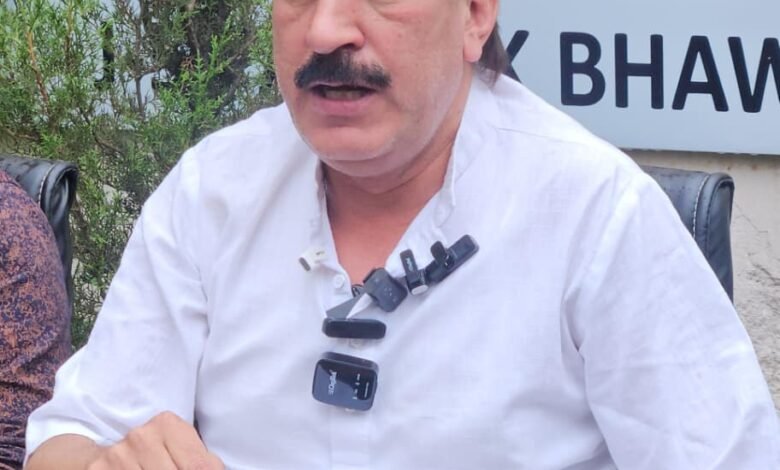
*By Altaf Thakur, BJP J&K Spokesperson*
For more than three decades, Kashmir’s story was too often written in the language of terrorism, separatism, shutdowns, stone-pelting and lost opportunities. Generations grew up under the shadow of violence. Schools were forced to close because of hartals, businesses suffered repeated disruptions, tourism was hit, and ordinary Kashmiris paid the heaviest price.
Today, however, a different Kashmir is increasingly visible.
It would be premature—and dangerous—to claim that the challenge of terrorism has disappeared. Terror attacks, including the horrific Pahalgam attack in 2025, have reminded us that the security threat remains real and demands continued vigilance. But there is an important distinction between terrorists retaining the ability to carry out violence and terrorism continuing to enjoy a broad social ecosystem of support.
It is in the latter sphere that Kashmir appears to have undergone a profound transformation.
The Collapse of the Street Ecosystem
Perhaps the clearest indication of this change is what is no longer routinely seen on Kashmir’s streets.
According to Government of India data, there were 1,328 incidents of organised stone-pelting and 52 organised hartals in 2018. Both figures fell to zero in 2023, with official assessments subsequently continuing to indicate the disappearance of organised stone-pelting and shutdowns.
For years, separatist organisations possessed the ability to disrupt normal life through protest calendars, shutdown calls and organised street mobilisation. Their influence was measured not merely by speeches, but by their capacity to close markets, stop transport and interrupt education.
That capacity has been drastically weakened.
The significance goes beyond statistics. A shopkeeper opening his establishment, a student attending college and a tourist moving freely through a market may appear entirely ordinary elsewhere. In Kashmir, after decades of enforced disruption, ordinary life itself represents a profound change.
Terrorism Losing Ground
Security statistics point in the same broad direction.
Official figures released in 2026 state that terrorist-initiated incidents declined from 228 in 2018 to 12 in 2025. Security-force fatalities fell from 91 to 16 over the same period. Stone-pelting, which averaged around 2,654 incidents annually during 2010–14, has remained near zero since 2022, according to the Government’s assessment.
These figures must never become a reason for complacency. Cross-border terrorism, attempts at recruitment and radicalisation, and efforts to destabilise Jammu and Kashmir remain serious security concerns.
But there has been a fundamental shift. Terrorism increasingly appears isolated from the wider aspirations of ordinary Kashmiris rather than capable of dictating the rhythm of everyday life.
That distinction is crucial.
Separatism’s Shrinking Space
The decline of organised separatism has been equally significant.
In March 2025, the Union Home Ministry announced that groups associated with the Hurriyat ecosystem had publicly distanced themselves from separatism. The Government described these developments as evidence of separatism losing its organisational base in Kashmir.
But the more important question is not what individual separatist leaders say. It is what ordinary Kashmiris choose.
The younger generation increasingly appears focused on education, employment, entrepreneurship, tourism, technology, sports and economic opportunity. Their aspirations cannot indefinitely remain imprisoned within political narratives inherited from the violence of the 1990s.
Today’s Kashmiri youth wants to compete, travel, build businesses, secure employment and participate in India’s growth story.
That aspiration may ultimately prove more powerful than any counter-terror operation.
Tourism Tells Its Own Story
One of the strongest indicators of normalisation has been tourism.
Jammu and Kashmir recorded more than 2.35 crore domestic tourist visits and over 65,000 foreign tourist visits during 2024, according to Tourism Ministry figures based on J&K Tourism Department data.
Tourism is much more than an economic statistic.
Every occupied hotel, every taxi on the road, every bustling market, every tourist at Dal Lake and every family visiting Kashmir creates livelihoods. It connects Kashmiris directly with people from across India and the world.
Terrorism thrives on isolation. Tourism encourages interaction.
Separatism creates walls. Economic integration breaks them.
From Protest Calendars to Development Calendars
For decades, Kashmir’s public discourse was dominated by the next shutdown, encounter or separatist call.
The emerging conversation is increasingly about roads, tunnels, railways, investment, employment, tourism and infrastructure.
According to official figures published in 2026, more than 41,000 government jobs had been created since 2019 through May 2026, while more than 9.81 lakh self-employment opportunities were extended under self-employment schemes during the preceding four years. The same Government assessment reported around ₹18,000 crore in investment between 2016–17 and 2025–26.
This is the battle that ultimately matters most.
Terrorism cannot be defeated permanently through the gun alone. It is defeated when society stops romanticising the terrorist; when parents want their children in universities rather than on the streets; when young people see entrepreneurship as more attractive than extremism; and when political disagreements are expressed through democratic institutions rather than violence.
Democracy Must Replace Separatism
Peace does not mean the absence of political disagreement.
Kashmir will continue to witness debates over governance, identity, development, statehood, employment and relations with the Centre. Such disagreements are legitimate within India’s democratic framework.
The fundamental transformation occurs when the ballot replaces the boycott and democratic argument replaces violence.
A confident India should have no fear of peaceful political disagreement in Kashmir. Democracy becomes stronger when every viewpoint that accepts the Constitution and rejects violence is allowed to compete before the people.
The real defeat of separatism will therefore not come merely when separatist organisations disappear. It will come when separatist politics becomes irrelevant to the aspirations of Kashmir’s next generation.
Peace Must Produce a Dividend
The next phase is consequently even more important.
The gains of improved security must translate into better employment, stronger private investment, world-class tourism, modern infrastructure and greater opportunities for young Kashmiris.
Corruption, unemployment and administrative inefficiency must not be allowed to create fresh alienation.
Security can create the space for peace. Good governance must fill that space.
The Centre and the elected Government of Jammu and Kashmir therefore share a common responsibility: to make peace economically rewarding for the ordinary citizen.
A young Kashmiri should be able to look towards the future and conclude that education offers more than radicalisation, enterprise more than agitation, democracy more than separatism and peace more than violence.
The New Kashmir Must Belong to Kashmiris
For too long, Kashmir was viewed primarily through the prism of Pakistan, terrorism and geopolitical conflict.
That narrative itself needs to change.
Kashmir should increasingly be known for its students, entrepreneurs, sportspersons, artisans, tourism professionals, scholars and innovators—not for terrorists and separatists.
Pakistan-sponsored terrorism may continue to attempt to disturb the peace. Security forces will continue to confront that threat. But the decisive battle is ultimately fought within society, and the strongest answer to terrorism is a population that refuses to provide it political legitimacy.
Kashmir’s transformation, therefore, cannot merely be a Government project. It has to become a people’s movement.
The most powerful image of the new Kashmir is not a security bunker or an encounter site.
It is a crowded school.
It is a thriving marketplace.
It is a young entrepreneur starting a business.
It is tourists walking freely through the Valley.
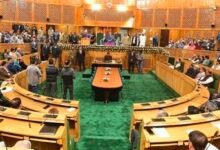
It is political opponents arguing passionately—and peacefully—before voters.
For decades, terrorism tried to convince Kashmir that its future lay in conflict. Separatism tried to convince its people that isolation was their destiny.
A new generation now has the opportunity to prove both wrong.
Kashmir is not merely moving away from terrorism and separatism. It is moving towards something far more powerful—normalcy, democratic participation, economic aspiration and the confidence to determine its future through peace.
And that may ultimately be the greatest victory of all.