‘Milk Queen’ may bring a new dairy option to Kashmir
SKUAST-K launches study to evaluate Saanen goat’s milk production, adaptability

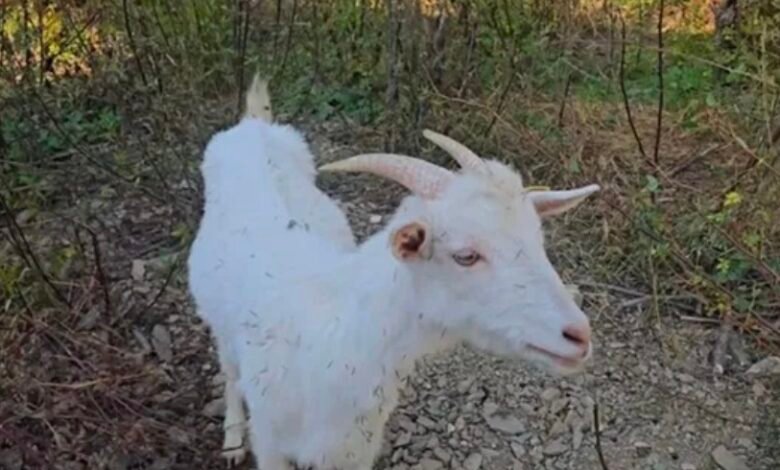
: Sher-e-Kashmir University of Agricultural Sciences and Technology of Kashmir (SKUAST-K) is exploring the potential of the Saanen goat, popularly known as the “Milk Queen,” as a household dairy animal in Kashmir. The research is being carried out at the Mountain Research Centre for Sheep and Goat at the university’s Shuhama campus in Ganderbal.
Dr Parvaiz Ahmad Reshi, Senior Scientist and Head of the Mountain Research Centre for Sheep and Goat, said the Saanen breed was introduced at the centre around six months ago to assess its suitability for local climatic conditions and its potential for milk production.
He said the breed could offer an alternative for households that want a regular supply of fresh milk but find it difficult to maintain large dairy animals such as cows.
According to Dr Reshi, an adult Saanen goat weighs approximately 50–60 kilograms and requires comparatively less feed and space than a cow. He said a goat producing around two to three litres of milk daily could be a practical option for households, although its actual performance in Kashmir would be established through research and trials.
The scientist said the centre would assess several parameters, including milk production, growth rate, reproductive performance, health and adaptability to local conditions. The breed’s ability to produce twins or triplets will also be studied.
Dr Reshi said international records indicate that Saanen goats can produce around three to seven litres of milk per day under suitable conditions. However, he emphasised that the breed’s milk yield in Kashmir could only be confirmed after breeding and production trials.
He also highlighted the breed’s generally calm temperament and creamy-white coat. According to him, the Saanen goat could be suitable for household rearing because of its manageable size and comparatively lower feed requirements.
The centre has planned a research programme spanning at least three years, during which controlled breeding and subsequent generations will be monitored. Based on the findings, scientists intend to develop a package of practices for farmers and explore ways to make the breed available to the public.
Dr Reshi said the centre was working to identify and maintain pure Saanen stock, noting that some goats marketed under the breed’s name may actually be crossbreeds.
He expressed hope that the research would help establish the Saanen goat as a viable dairy animal in Kashmir, potentially providing households with another source of fresh milk and creating opportunities for small-scale dairy farming.
The university will decide on wider distribution or auctioning of the animals after evaluating their performance and completing the necessary research.